
ROVA
Frieze #262
Frieze #262
Couldn't load pickup availability
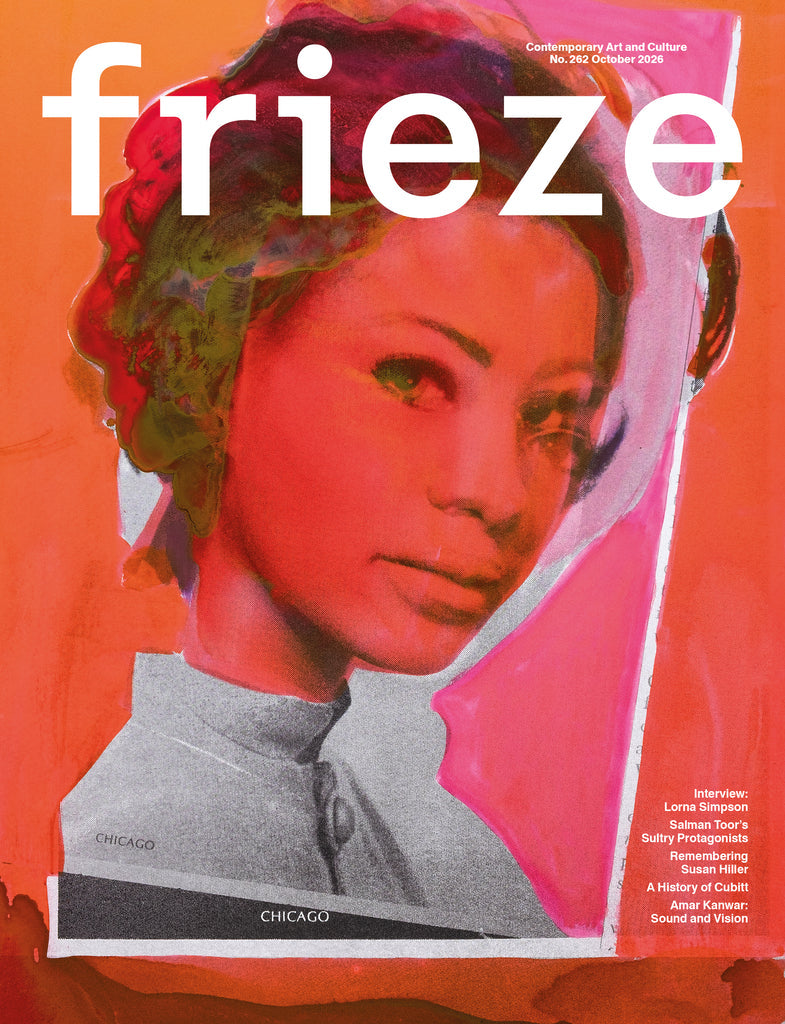
For the October issue of frieze magazine, writer Zoë Hopkins speaks with Lorna Simpson as she returns to the UK with an exhibition at Hauser & Wirth London. Plus, on the occasion of Susan Hiller’s survey at KW in Berlin, novelist Lynne Tillman elegizes her late friend.
Interview: Lorna Simpson
‘You can’t make the same paintings again; that’s not a desire, nor something to accomplish.’ Lorna Simpson considers the materiality of painted, collaged and archival layers in her work.
1,500 Words: After Susan
‘Like discovering gold, suddenly I recognized Susan.’ Lynne Tillman’s ode to the influential friendship – and laughter – she shared with Susan Hiller.
Also featuring
Ahead of Amar Kanwar’s major solo exhibition at Serpentine North, T.J. Demos profiles the filmmaker and the art of his ‘half-stories’. A thematic essay by Nathalie Olah probes what the stage truly represents for a burgeoning crowd of contemporary artists fascinated by the theatre. And Polly Staple, Amal Khalaf, Nicole Wermers and Michelle Cotton reflect on the co-operative Cubitt Gallery’s vital role in London’s creative scene.
Columns: Play
Sean Burns explores how Salman Toor captures queer longing and energy in works on view at The Courtauld Gallery, London. Claudia Ross speaks to artist Jill Magid, amid a string of shows, about probing absurdity in civic bureaucracy. Artist Sonia Kazovsky tells Ivana Cholakova how she built her ‘Playground’ (2026) as an accessible, imaginative space. Laura McLean-Ferris outlines how Ryan Gander’s transdisciplinary practice taps into the unstable and unknown. And, as film collective Wakaliga Uganda’s latest debuts at Chisenhale Gallery, London, Myriam Ben Salah considers their eye for turning stories into sites of reversal.
Plus, Max Andrews responds to Teresa Solar Abboud’s installation ‘Osteoclast’ (2021) and, for the back of the magazine, assistant editor Ivana Cholakova pens a postcard from the Greek island of Skiathos. Finally, this issue marks the debut of frieze’s ‘Seating Chart’, inviting the art world’s most influential names to dinner.